
In a world that measures worth by productivity and output (quantity), rather than integrity and intent (quality), it’s no wonder if people are burnt out, anxious and lonely.
Systems might ask you to do more with less, work culture might say turn up even when you’re sick – or else – and many feel they have to race around every day, despite the costs to their health, just to be shown some respect.
What if, instead, we measured contribution through acts of community, value through intention for learning, and wealth through meaningful connection.
What I’m talking about is peace – both individually and collectively, and it feels like it’s time we made it a priority.
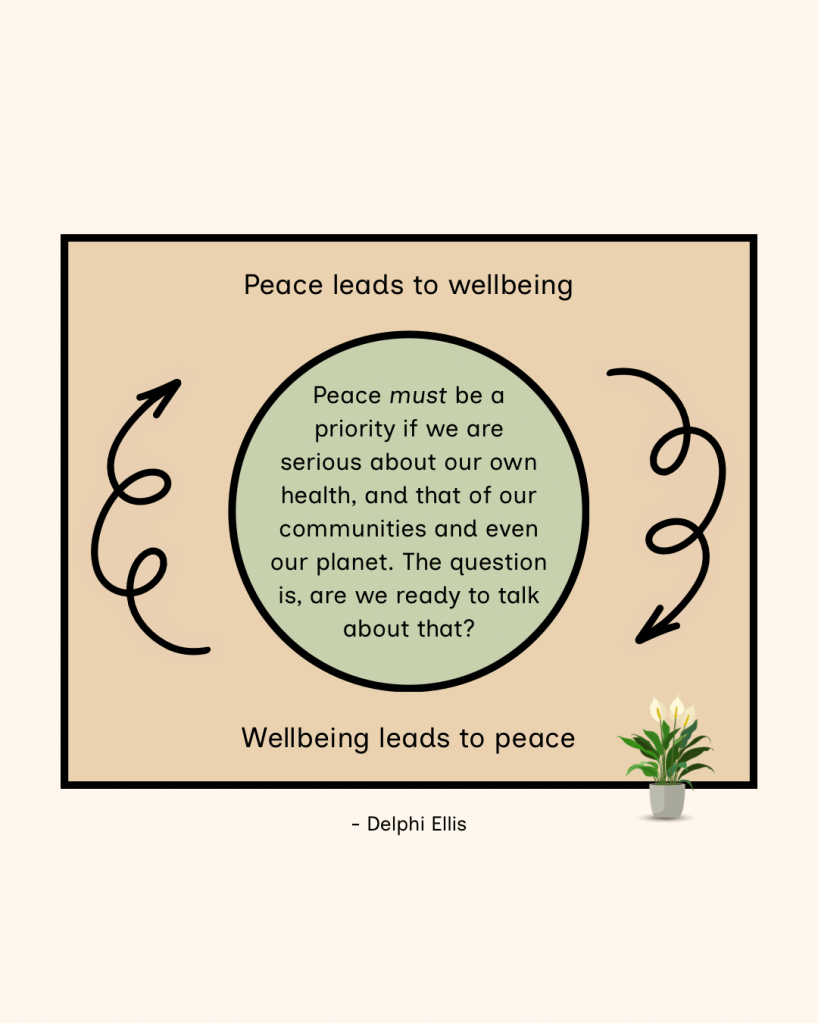
It makes sense that there’s a direct relationship between feeling peaceful and our wellbeing. The question is though, are we ready to talk about that? Violence (whether direct, cultural or structural) has become so normalised in every day life, it would be easy to assume that’s just the way it is, and even the idea of peace is a utopia.
But if we are serious about our own health, and that of our communities, even our planet, peace must be part of that discussion, whether in our homes, schools or workplaces. It could be prioritising wellbeing through learning about inner peace, or looking through a system-wide lens about what needs to change to normalise peaceful living for all of us.
With this in mind, I’ve offered below some reflection questions, in case it’s your thing. You could run through these in your mind, grab a pen and paper if you prefer, or make notes in your phone if that’s an easier option.
Here we go:
- What does the word peace mean to you?
- What would bring more peace into your world, but also what peace can you give back to it? (If each of us wants a world that’s more peaceful and caring, is that how each of us chooses to show up each day?)
- What would peace look like for you internally (ie “inner peace”) and/or externally (ie, what does your workplace, neighbourhood or the world need to commit to?);
- How would you know or measure if peace had been achieved?
- Can you make space for discussions about peace, and if so what would that look like and with who? Could this include family, friends, schools or businesses? Could you ask people in positions of power to create space for peace and wellbeing that benefits all of us?
- What channels do you have available to you to promote peace, and who can help endorse peaceful living in your family or wider community? If you don’t know, who might?
- If people resist your attempts to prioritise your peace, what will you do, including how will you take care of yourself? What boundaries might you need to set?
- How much do you know about peace, pacifism and peaceful living, and where could you learn more? (Here’s my article about pacifism and how it’s good for your spiritual health too).
- Can you embrace the idea of nonviolence as a daily practice, in the way you communicate and walk through life? (This doesn’t mean being happy all the time, just choosing not to abuse). If that feels hard, why is that?
- Can you create an action plan with any of this in mind, whether that’s creating your own inner peace, or with a wider community lens?
Remember not to judge yourself, but show compassionate curiosity for your answers and see if there’s deeper work that evolves. (Always speak to someone you can trust if that brings up anything painful). Most of all take care of yourself – choosing peace every day isn’t always easy (especially when others don’t), and may require some unlearning too.
To be clear, this doesn’t mean it’s up to one person to fix the world, and peace may look different to everyone. Some action will be within our control, but some may need more of a collective, collaborative effort, especially where some are living under the weight of oppression.
My point is each of us may be able to do something, even if it’s just an intention not to put any more harm into the world that’s already there. I think we can all do that. Don’t you?
© Delphi Ellis – All rights reserved. This is an opinion post which may appear on other websites or platforms affiliated to the author. For full terms and conditions of use, please visit the policies page.

