

If you followed the chaos that was COP31, you’ll see why I think we have a problem with how we define leadership today.
When I talk about leadership in this article, I’m talking about people who have decision-making powers that have the potential to affect others (if not everyone).
As someone who has worked across the private, statutory and third sector for more than 30 years, and has experienced both management and leadership, I feel I can say this:
These days, many “leaders” but particularly their organisations – and especially some statutory services – just seem to care about power, money (profit) and control. It’s not actually leadership in its most authentic way, it’s more like authoritarian management.
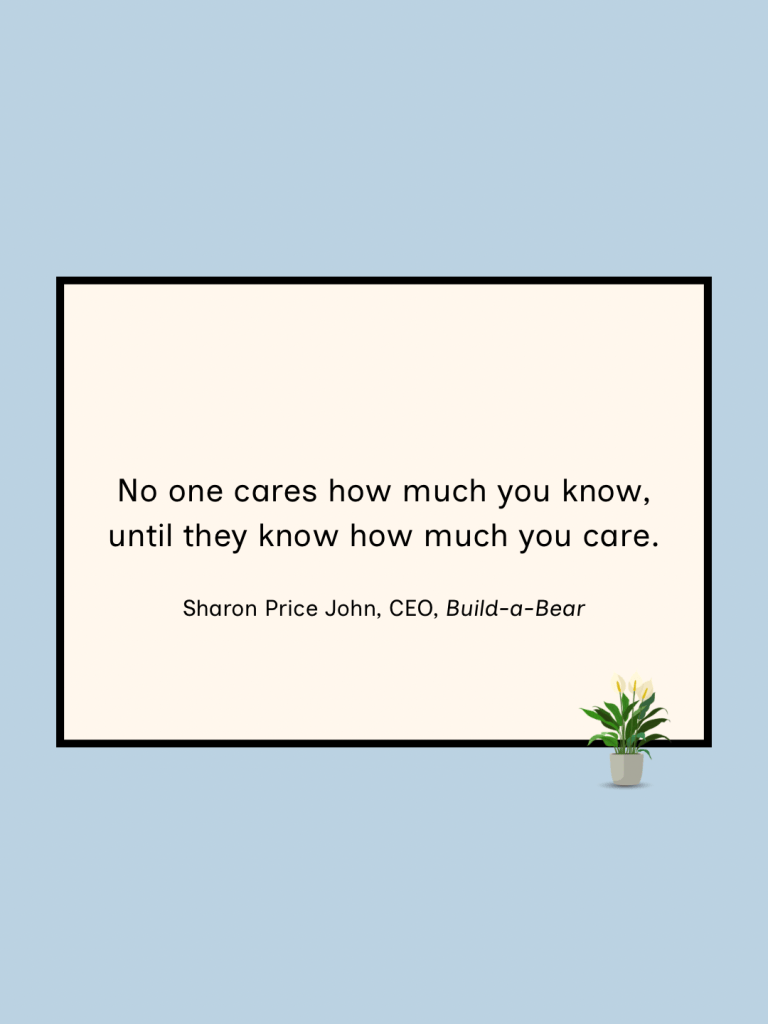
Now a person doesn’t have to be in a “senior” position to be a leader in its broadest sense, but these days anyone with confidence, a bit of knowledge and an authoritarian mindset – no matter how awful they are – could be recruited into a position of power. It’s an example of “failing upwards” and here’s why that’s worrying:
All (some) managers seem to care about are the rules. Authentic leaders care about their community, whether at work or in their neighbourhood.
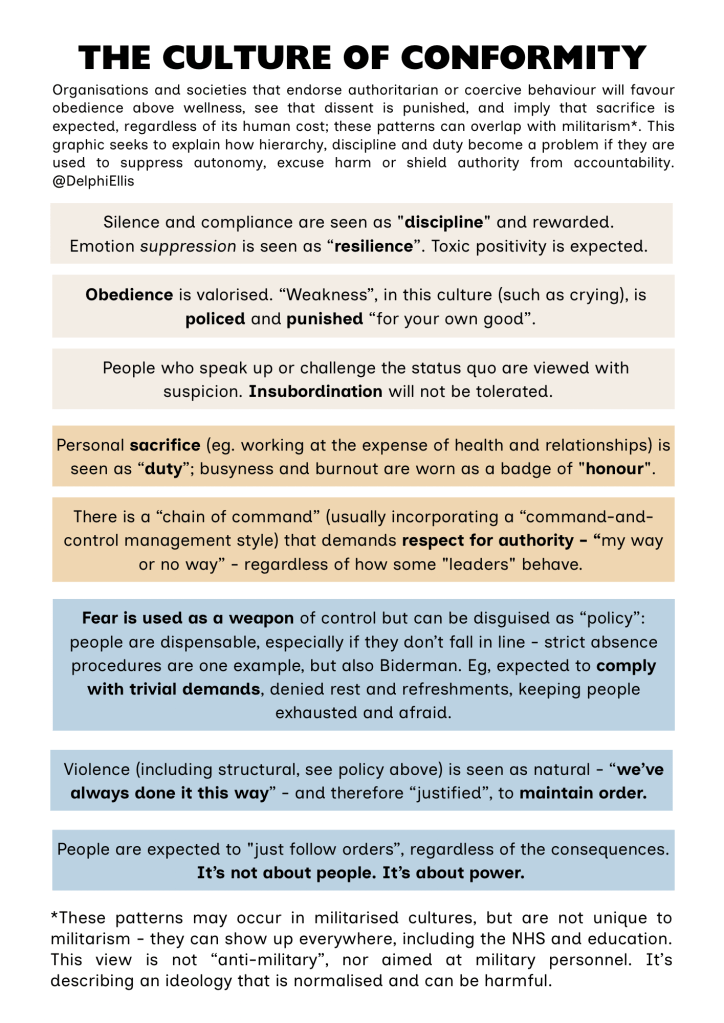
Today, those managers will say someone struggling with a heavy workload “lacks resilience”. Authentic leaders would call that workload unacceptable and involve their workforce in what needs to change.
(Authoritarian) Managers will punish people for being off sick (especially with burnout) and call it “policy”. Authentic leadership would tear up the policy and look at their workplace culture.
Those managers restrict space for action and call it “discipline”. Leaders promote autonomy and celebrate initiative.
(Authoritarian) managers will expect long hours from employees – for no more pay – and call it “duty”. Authentic leaders will see it as their responsibility to protect the workforce from any structural violence that keeps staff exhausted and afraid.
Managers blame staff – or each other – when the procedure (or global summit) they created goes wrong. A leader would show moral courage and say they’re sorry for any harm they’ve caused, and facilitate change.
Managers today seem to lead from a place of dominance and “it’s all about “me”. Authentic leaders would lead from the heart and soul – a sense of shared purpose and unity – and say “it’s all about “we”.
Notice how today much of this management “style” might sound like an abusive partner, especially if they lean into DARVO (“it’s not me, it’s you”), or Biderman behaviours (like restricting breaks and enforcing trivial demands).
I would even go as far as to say it enables the mindset of entitlement that we also see in male violence against women, a conversation we also need to have. If (predominantly) men in power are allowed to dominate at work or on the public stage, why wouldn’t they try at home?
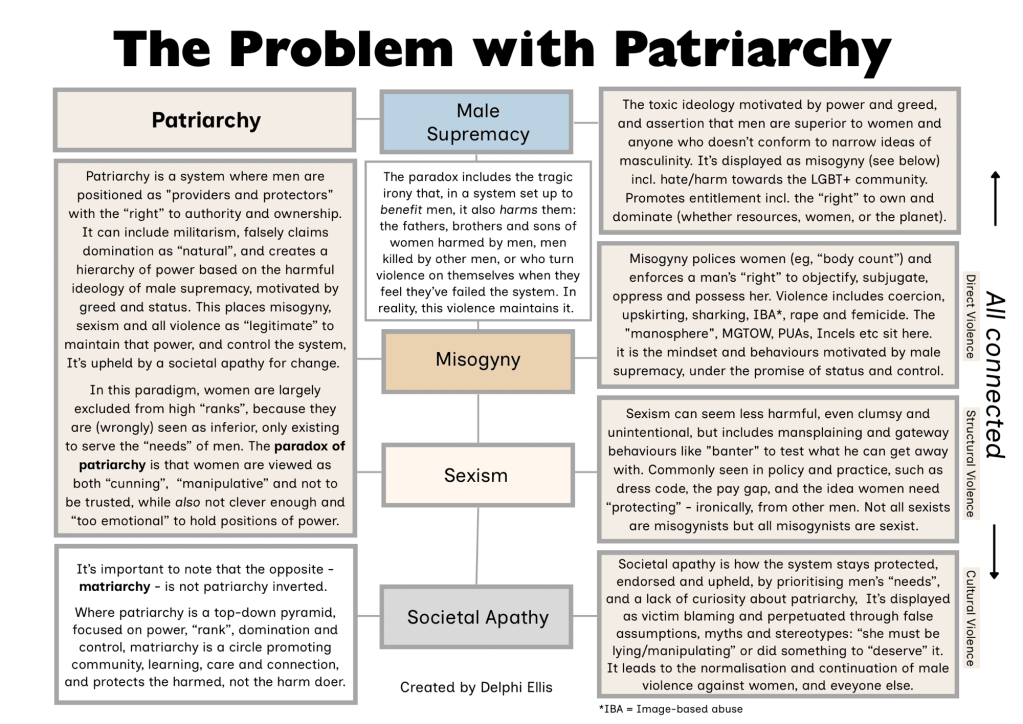
For me, it’s all connected to the ideology of supremacy. If the people in charge only care about status, greed and control, rather than learning and connection, no wonder we are being told we need to “be ready” for war.
It’s time to bring authentic leadership back, for all our sakes, especially if we really care about peace for everyone.
That’s what I think.
© Delphi Ellis – All rights reserved. This is an opinion post which may appear on other websites or platforms affiliated to the author. For full terms and conditions of use, please visit the policies page.

