
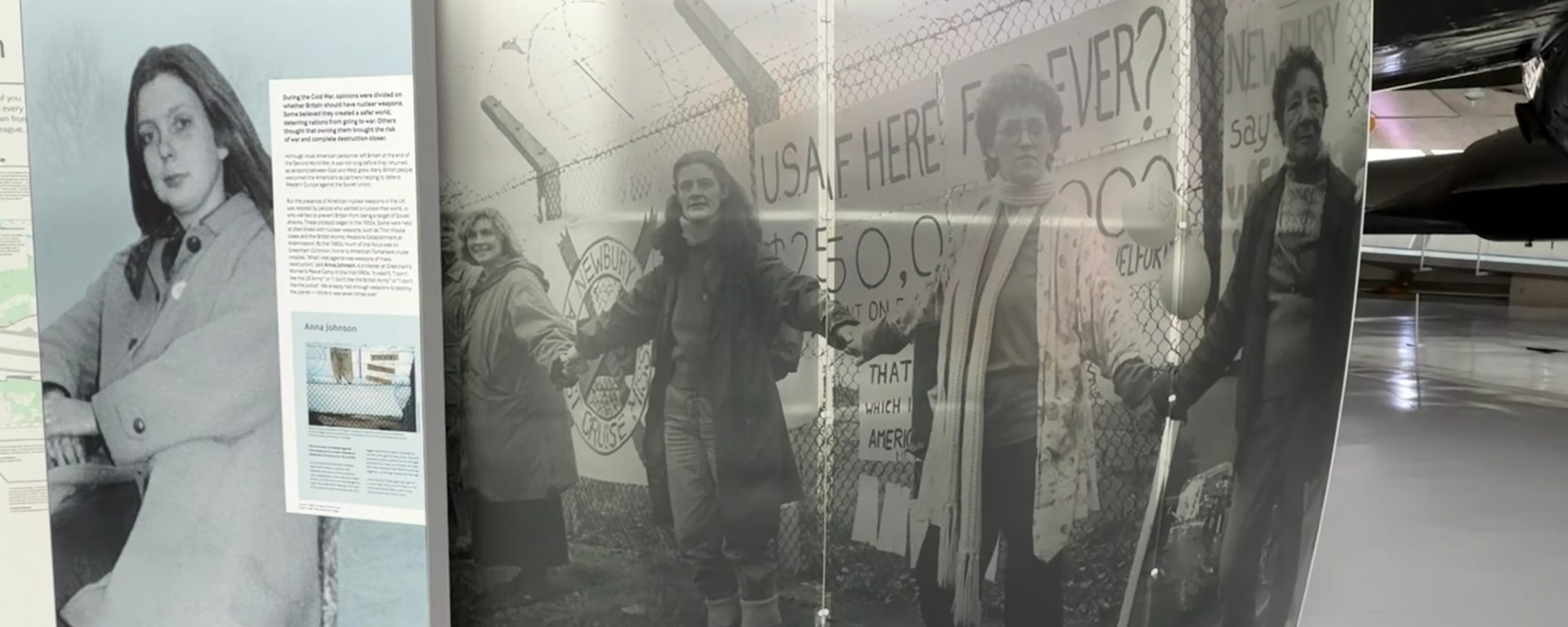
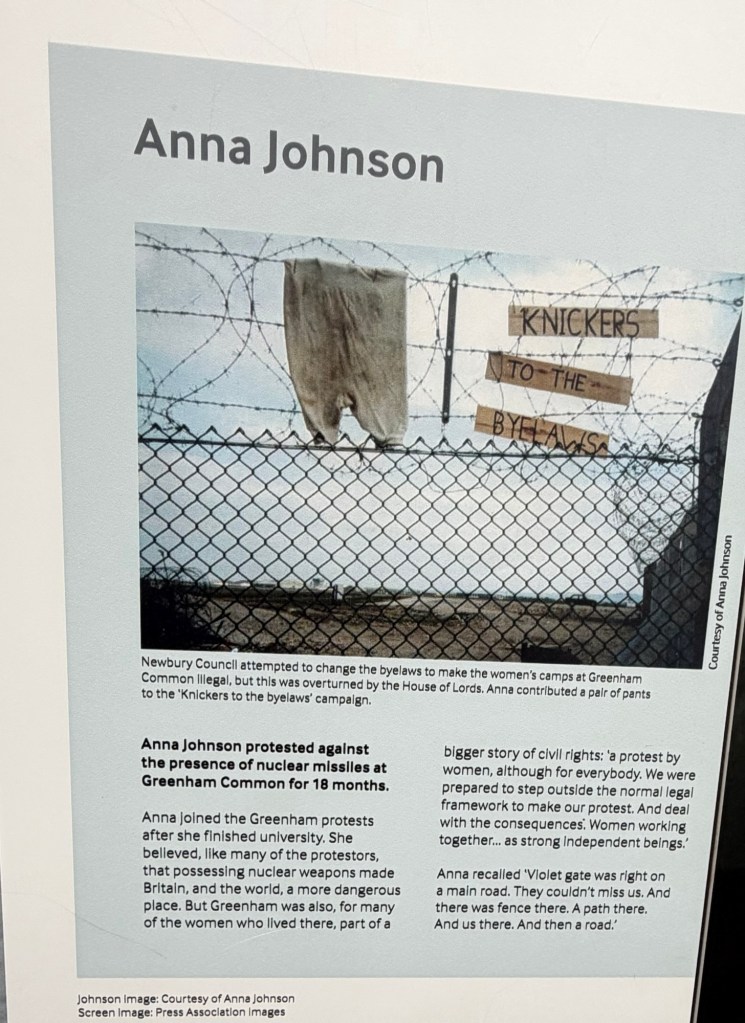
I recently visited the Imperial War Museum at Duxford, where one exhibition told the story of Anna Johnson. Anna protested at Greenham Common for 18 months, against the presence of nuclear missiles.
The exhibition explained that, at the time, Newbury Council had attempted to change the byelaws, to make the women’s camps at Greenham Common illegal, but this was overturned by the House of Lords. Anna had contributed a pair of pants to the “Knickers to the Byelaws” campaign, and a photo of them, pinned to the railings, is on display at the museum.
The humour used by activists at Greenham Common was cheeky, strategic and brilliantly political. It serves as a reminder that resistance to war – and challenging the ideology and narratives behind all violence – can be intelligent, human and, importantly, nonviolent. (Research by Erica Chenoweth suggests that nonviolent civil resistance is far more successful in creating broad-based change than violent campaigns).
The tactic (of using underwear) was intentionally playful and confrontational, using humour to undermine potentially harmful authoritarianism at the time. It was a way of reclaiming agency in a militarised space, and highlighted how male-dominance, in a variety of forms, limits choices for women, and tries to oppress them.
“Knickers to the Byelaws” mocked the absurdity of the way women’s bodies were being policed (and of criminalising peaceful protest), while simultaneously pointing to the spending of millions (now billions) on armaments under the banner of “safety” – it begs us to ask the question “whose safety”?
Because with or without war, women are still predominantly harmed by violent men.
This conversation is just as relevant today. Violence is usually perpetrated by men, whether criminalised by the state or not, and women continue to be the ones most harmed.
Figures show that “…in 2023, 4 out of every 10 civilians killed in conflicts were women, and 3 out of 10 were children.”
Women’s care work “often plays a central role in supporting the family, the community and a country’s coping capacities in fragile contexts [such as war and conflict zones]. In many cases, social protection mechanisms, health and educational services are barely available, and these gaps tend to be filled more often by women than men.”
Records also show that the intentional killing of 50,000 women globally every year (referred to as femicide), is often by their intimate (male) partner. Violence obviously has a human cost, and lives can never be replaced (that includes at war too). In financial terms, in the UK, every domestic homicide also costs £2.2million.
It’s reasonable to ask, for those of us living in a democracy, how money could be better spent on violence prevention, by addressing the root cause and ideology behind it, which shows up as other hates and harm like racism and homophobia. Recent reports consistently show that democracy is increasingly under threat from agitators and bad actors who want to sow division in our communities.
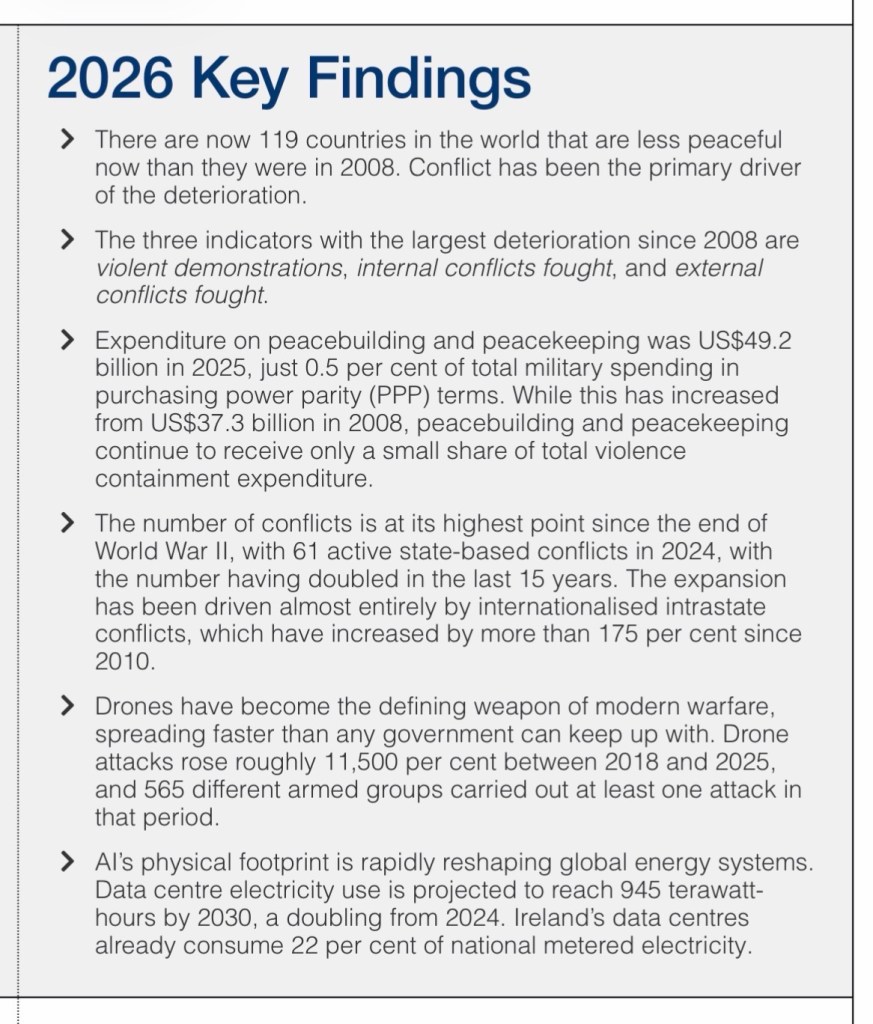
The latest (2026) Global Peace Index explains that conflict is at its highest point since the end of World War II, with 61 active state-based conflicts in 2024, the number having doubled in the last 15 years.
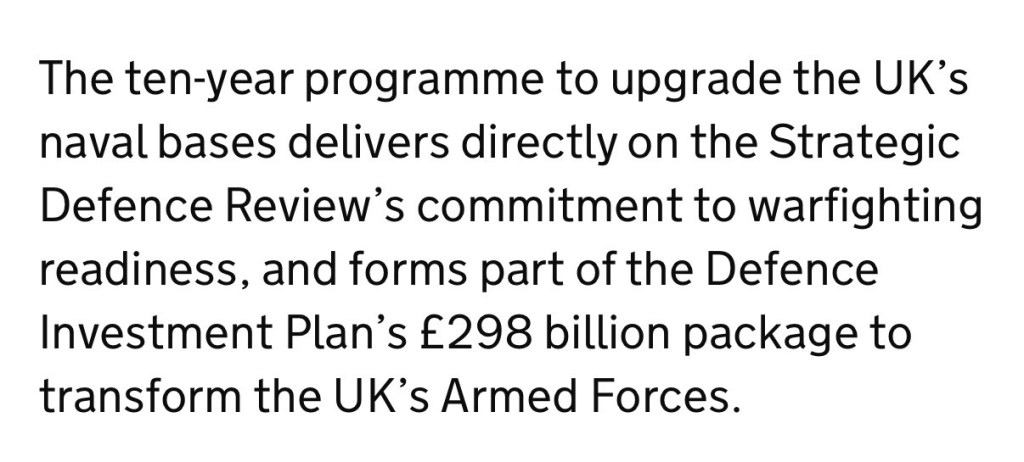
This is as the UK government commits to Britain becoming “war ready” within 10 years, with a total budget earmarked currently at £298billion.
Some researchers, like those at Protection Approaches, argue social cohesion will collapse long before that.
To me, it feels more important than ever to have conversations at home and at work around what community really means and how to foster peace – especially for those of us who also care about ending male violence against women. To recognise that it doesn’t just show up in our homes and on our streets, but around the world as toxic narratives and ideology, that promote dominance, supremacy and control, rather than learning and meaningful connection.
It also feels imperative to say that war only achieves something if it stops violence; we’ve had two world wars which were devastating to millions of people; most of us probably have a parent and/or grandparent affected by them. Soldiers and their families endured unimaginable pain through violence, alongside the malnutrition that killed more people than the conflict itself. Lest we forget, their lives – and deaths – must stand for something; Remembrance can be an act of resistance to remind us that it must never happen again and that violence has to end.
Let’s hope for more peace in our time.
Find this conversation heavy? It can be. Make sure you look after yourself while navigating these difficult times.
© Delphi Ellis – All rights reserved. This is an opinion post. For full terms and conditions of use visit the policies page.


One thought on “Peace in our time? Let’s hope so”
Comments are closed.