
Note to the reader: I occasionally vent though writing because it’s good for the soul and a healthy expression of anger. This is an opinion post offered as one example of that.
Misogynistic rhetoric says women are inferior, irrational and weak, yet also powerful enough to “destroy civilisations”, “ruin men”, “control courts”, and “rig the system”.
This is what I call the paradox of patriarchy.
Because both cannot be true.
So-called “manfluencers” paint women as conniving and manipulative. They villainise and dehumanise us as vixen-like “creatures”, deeming us capable of causing the downfall of men.
In the same breath, women are too “emotional”, too “sensitive” and too “unintelligent” to be trusted with any power.
It doesn’t make any sense.
Let’s be clear: this is not a new narrative – it’s a tale as old as time. Women have been blamed for everything since written records began.
Think Eve.
Think Medusa.
Think the witch trials.
So let’s unpack it.
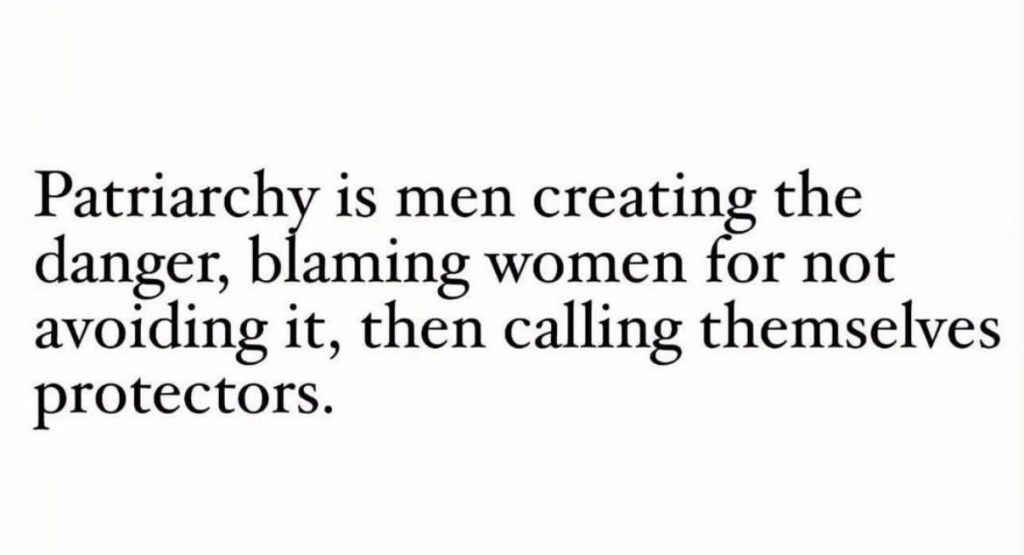
If a man’s view is that women are simultaneously power-less and power-full, he’s not describing reality, he’s perpetuating a myth.
One that seeks to blame others – but especially women – for men’s “pain” while he avoids accountability, and build resentment to justify the hate and harm some do.
It endorses the shady notion of supremacy, that somehow men are “better than …(everyone/thing)”. That men “should” have a right to control, and that their role is to protect us from anyone not like them, thereby “justifying” the violence some choose to commit.
But who is protecting us from violent men?
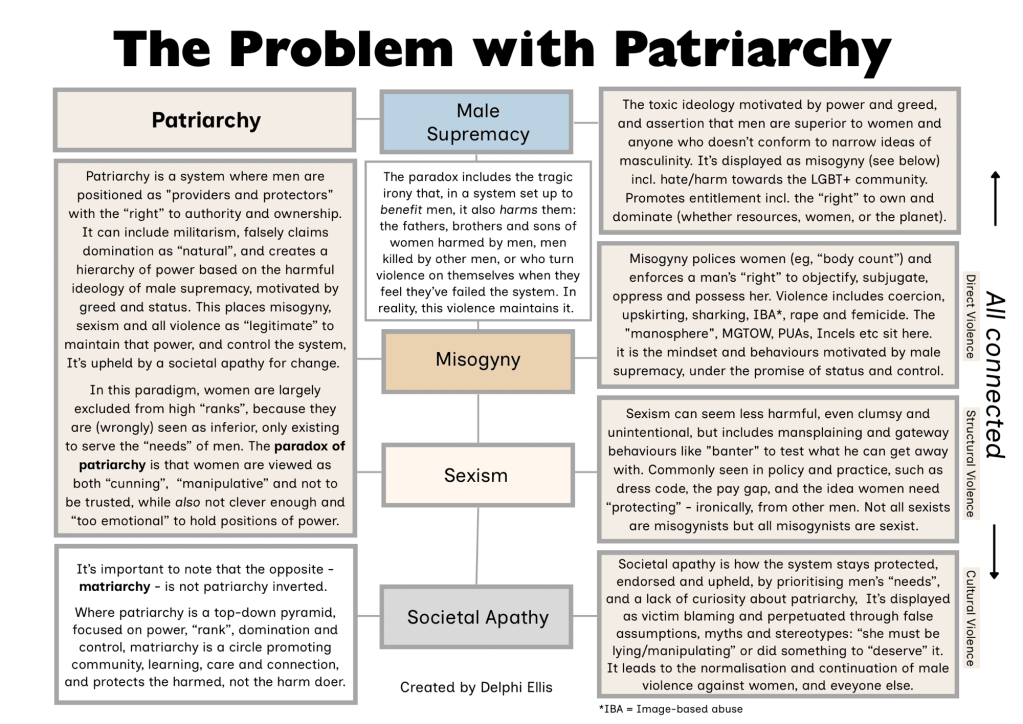
This is why the system of patriarchy needs to be deconstructed and dismantled, with an awareness, by the way, of how it includes other harms like racism and homophobia, as well as misogyny and sexism (all based on the dangerous ideology of supremacy).
Some (many?) men and boys have been conditioned to prioritise power and control over learning and connection, and today’s “manfluencers” exploit that.
They are not offering safety and certainty, they’re simply lining their pockets through a false narrative that promotes entitlement, status, greed, “comfort” and control, and which some men and boys then choose to believe.
it is a choice. And society lets them get away with it.
What about male loneliness?
Let’s be clear, correlation and causation are not the same. A man can be lonely and that can make him feel sad or angry – but that doesn’t make him violent; that’s to do with his mindset, beliefs and judgements he chooses to make and display.
So male violence is not caused by feeling lonely, or not “belonging”. Lots of people sadly feel that way – including women – yet don’t hurt anyone.
If it was just about loneliness, men and boys would simply seek a network to tackle their loneliness or meet a need to “fit in”; they’d join a football team, book club or choir. And some do.
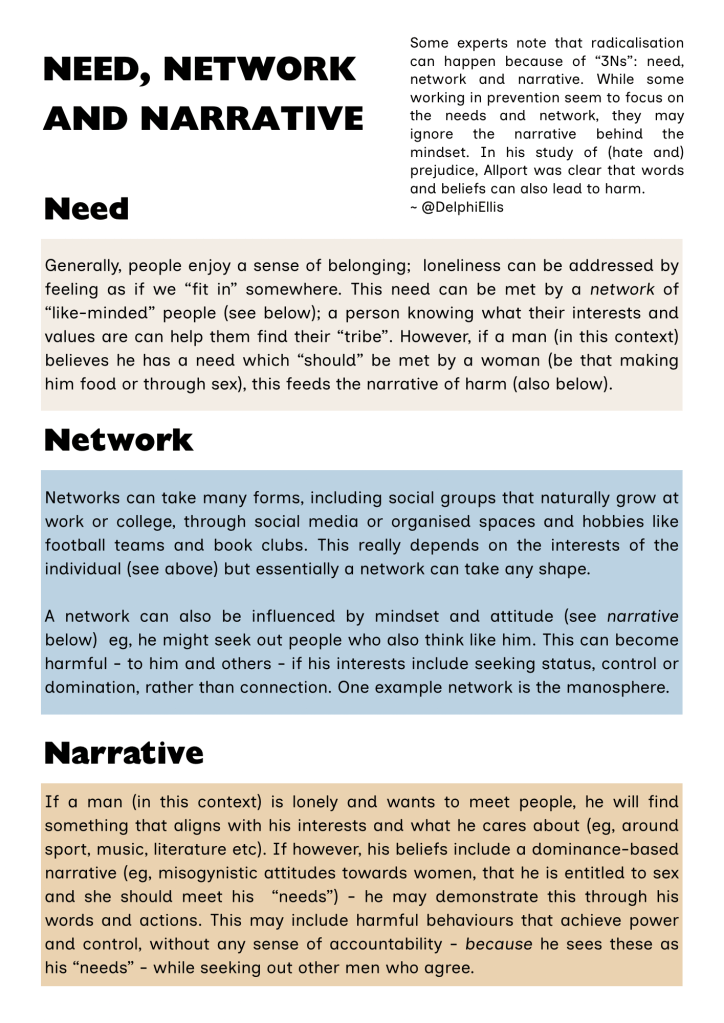
Where some have dodgy beliefs about women though, and others they believe are inferior, it perpetuates a harmful narrative: that men are superior and entitled to harm. In this paradigm (of patriarchy), men’s truth is seen as the truth and only they have the “right” to power.
Even if someone grows up learning one thing, or feeling another the science is clear: we can unlearn it.
Dismantling the system
The system of patriarchy is crafted to benefit men and promise them (control of) the world. Some of these “manfluencers” provide – and perform – a narrow script of manhood, with toxic and narrow ideas of what it means to “be a man”.
But if they really cared about men and boys, they’d choose a script that’s wider, and more inclusive. More healthy.
They don’t.
So male violence – a conversation we need to have – is not really “belonging” or “protecting” anyone or anything; It’s part of a system set up to benefit men, which ironically hurts them too.
© Delphi Ellis – All rights reserved. This is an opinion post. For full terms and conditions of use, please read these policies.


3 thoughts on “The Paradox of Patriarchy”
Comments are closed.