

This is an opinion post which discusses death from the outset and alludes to harm and abuse.
Years ago (and this is genuinely a true story), I remember reading an obituary where the family said something like:
“There won’t be a funeral, we are glad he is dead. He is going in a box in the ground where he can’t hurt us anymore”.
In one way or another, I have supported the bereaved for more than 20 years. In that time, I have genuinely lost count of the number of people who, while grappling with their grief, would say they were mourning the person they wished someone had been, alongside the person they actually were. It wasn’t always the case, but definitely more often than some might like, particularly if they’d been alive to hear it.
Some people feel guilty for speaking that way, because of the unwritten rule that “we shouldn’t speak ill of the dead”. At some point in their life, someone may have been told it’s “only right” to stay quiet – even if speaking the truth – because the person that has died is “not here to defend themselves”. But they’re also not here to be held accountable either.
The idea that it’s wrong to talk about our experiences of someone who has died, is a narrative designed – and often achieves – the silencing of people. The “rule” makes it easier to shut down the conversation, so that the listener doesn’t have to feel the discomfort of hearing (or processing) what’s been said. It also gives the dead one final act of control, if it secures that silence long after they’re gone.
But speaking up about their lived experience, especially if they would have been punished for it when someone was alive, might be the only way a grieving person can heal. The death can give them permission to finally be heard.
Nevertheless, society can have a habit of silencing the harmed and protecting the harm doer; that silence keeps the wrong people “safe”. To adapt a quote in a news article by Jackson Katz, an American educator who talks about male violence against women (another conversation we need to have), it might take a village to raise a child, but it also takes one to hide a perpetrator. Not all men (in that context) hurt people but, when they do, parts of society still tries to shut the conversation down – even when they die.
My point is, a person isn’t owed our respect when they’re dead any more than when they were alive, just because they’re not here to enforce or demand it. If they wanted that in death, they should have worked for it in life; respect for authority is earned, not a right.
On that note, we do hear joyous stories of a life well lived, if someone has genuinely lived it; we don’t seem to have a problem hearing – or sharing – those. We can notice this when certain celebrities die, and when we feel the unexpected grief for someone we loved but may have never even met.
We talk about their acts of generosity, for example, like those that came to light when George Michael or Dolly Parton died; their kindness, their warmth, their support, keeps their legacy alive. The dead won’t worry if they lived a life of love.
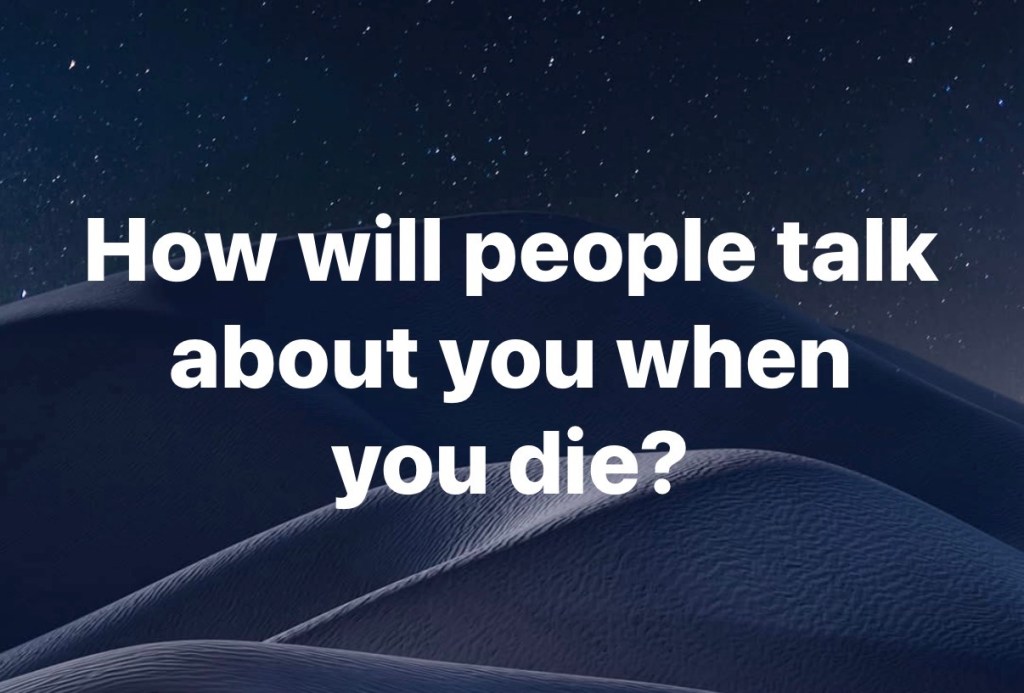
As morbid as it may sound, I think about this from time to time, mainly because of all I’ve seen and heard: how will people talk about us – any of us – when we die, based on the life we have lived and the way we behave now?
I’m not just talking about in the individual sense either, like how will your children talk about you or what will your neighbours say.
I mean, when the world looks back on this moment 100 years from now (assuming it still exists…), will they look at us like George or Dolly, or will there be people who are glad we are dead too?
Who are you – and who do you want to be?
If there are things in your past you may need to confront, whether someone else’s behaviour or your own, talking to someone whether friend or professional may help, especially if you’re not yet showing up as your most authentic self today.
Shadow Work can be useful, to reconnect with parts you keep hidden, even if with good intentions (or not). Similarly, it helps to know what your values are, so you can choose to live in alignment with them each day, as well as knowing when – and how – to manage your emotions if they get heavy. You can make choices that help take you towards the version of yourself you want to be.
Even though we all hope death is a long way away, it’s ok to talk about it (how can you “jinx” what’s going to happen anyway?). Prioritise being honest now: say what needs to be said – with love – so there’s no unfinished business when the time comes. It goes without saying that, if it ever feels unsafe to do that, it’s ok to make your excuses and leave.
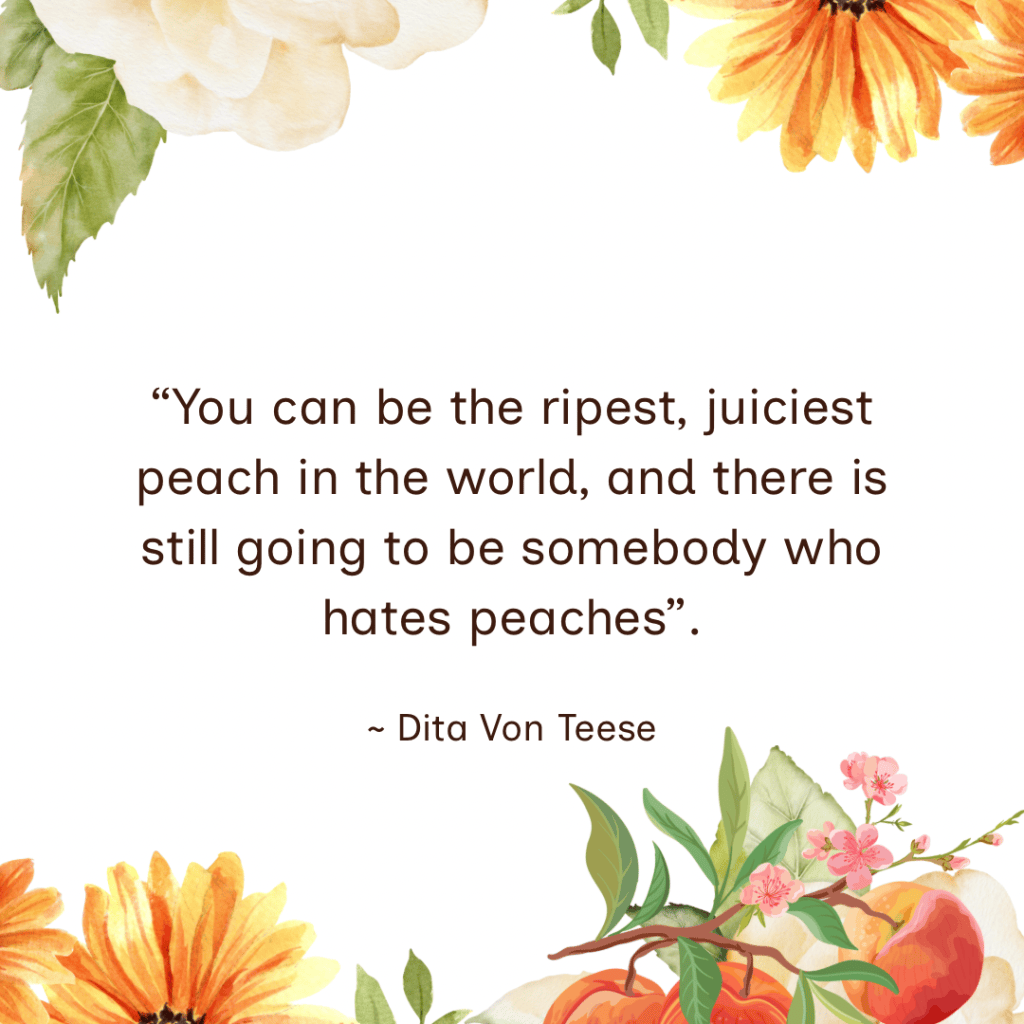
None of this means every person you’ve ever met has to like you or say nice things when you’re gone; that would be unrealistic. As Dita Von Teese once said “You can be the ripest, juiciest peach in the world, and there is still going to be somebody who hates peaches”.
It’s also not healthy to think about other people’s opinions – or death – too much. But certainly there are people out there who can help you be the best version of yourself you can be, today and each day until then.
So what do you hope people will say about you? And based on who you are today, and who you have been to them until now, what might they actually say?
Because whatever happens, in the end, just know they can have the last word, not you.
If you are affected by any of the topics covered in this article you may find this list of links of interest. In the UK, Samaritans are available 24/7 on 116 123
© Delphi Ellis – All rights reserved. This is an opinion post which may appear on other websites or platforms affiliated to the author. For full terms and conditions of use, please visit the policies page.

