

It’s not easy when we’re feeling overwhelmed, so knowing what to do next can be useful. Here’s some food for thought.
When we are activated – that is, when we are in ‘Fight or Flight’, when our heart starts pounding or our mind starts racing – everything can feel catastrophic.
This is because the brain may be behaving as if our life is in danger, and is what Professor Paul Gilbert, author of The Compassionate Mind, describes as our “tricky brain”: it’s doing the right thing in trying to keep us safe, but often in the wrong moment.
We now know there’s a link between what we think, how we feel and what we do. We also know that beliefs, intention and motivation can play a role in driving behaviour.
Choose Connection
We can also now recognise that people can choose how to respond depending on the environment. We know this because some people will scream at their kids but wouldn’t dream of raising their voice that to their boss; in other words, they can control the way they express their emotions.
This can depend on a person’s motivation: if it’s power and control, they’ll seek to dominate and resist change. If it’s love and connection, they’ll work hard to respond more healthily.
The science supports that we can train our brains to behave differently, no matter who we’re dealing with, once we know how.
We can’t mitigate for every experience, true, but we can get to know, through self-awareness practices like mindfulness, what a certain emotion feels like and how we respond when that shows up.
This is the good news: there are things we can do when experiencing intense feelings that limit unhelpful reactions, and encourage healthier responses.
We can’t expect our brain to just know what to do though, unless we’ve taught it how. So the key is to plan, prepare and practice what we want from that moment when we feel a certain way.
Here are some ideas that might help.
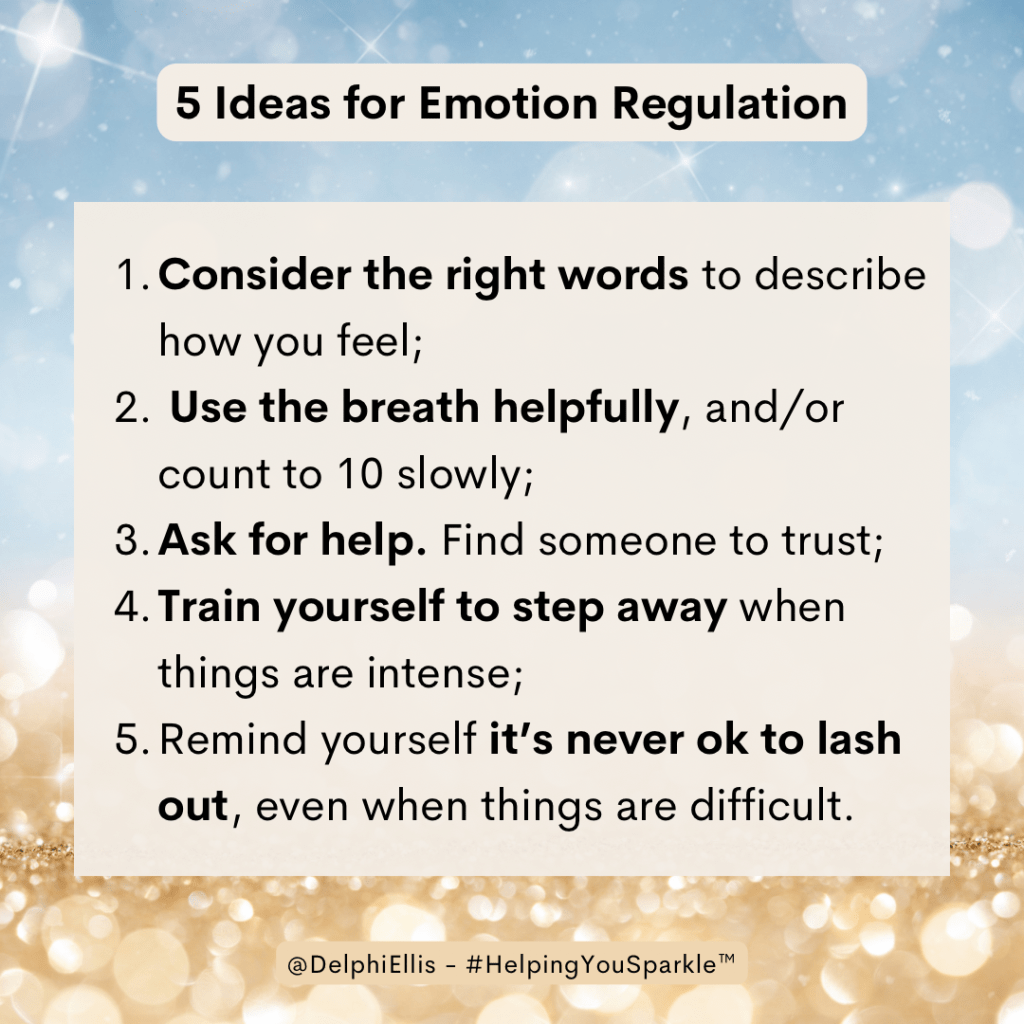
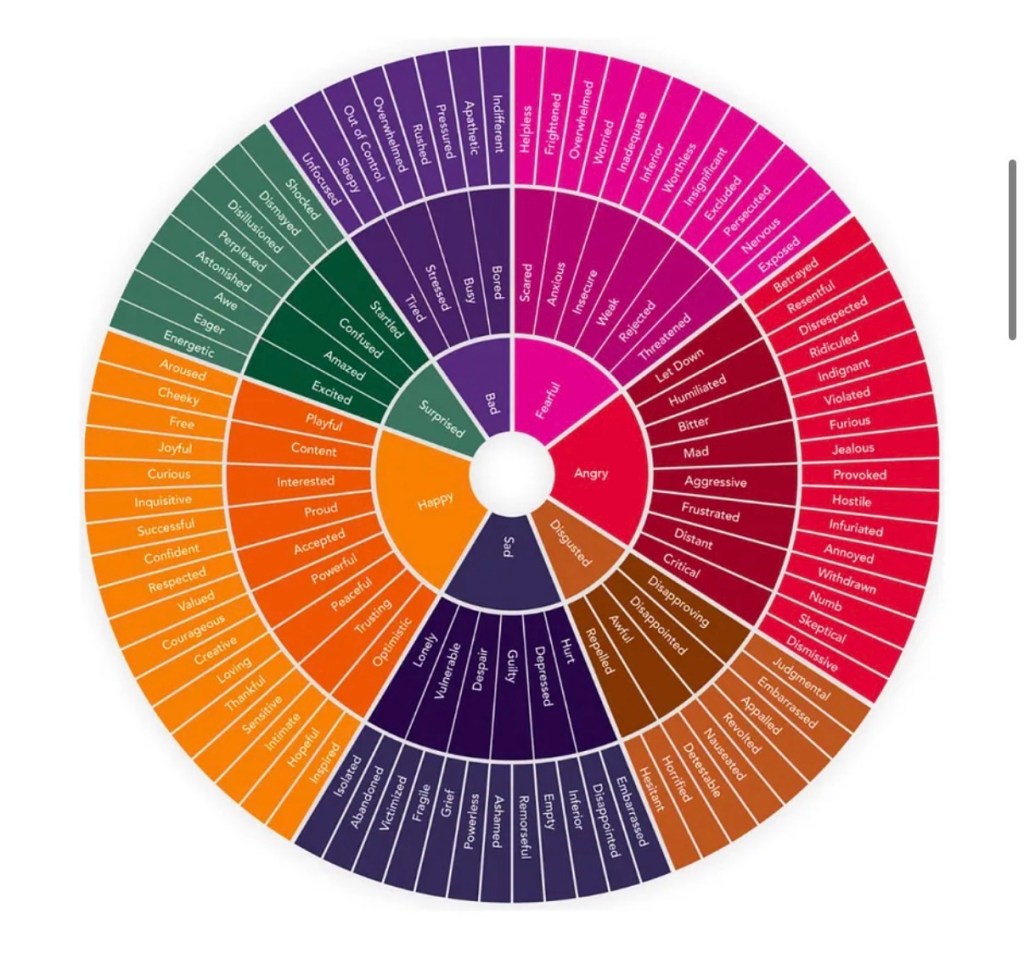
1. You could start to consider right the words that describe more accurately how you feel, rather than just saying “I’m stressed” or “I’m so angry”. Through self-awareness, we can learn to distinguish between say sadness and disappointment, frustration and jealousy. We can then expand our vocabulary to give words to what we’re experiencing when these feelings show up in the body. The Feelings Wheel can be a useful tool for this.
2. Once we’ve done the work of understanding what we feel when we feel it, we can use the breath helpfully to down-regulate that (basically, calm the nervous system). We know that the breath can be the switch between “I can’t cope” and “ I can cope”, so even taking a few deep breaths (if possible) can make all the difference. It might sound old-school, but counting to 10 can also be useful if done effectively, and we can also do this using the breath. For example, taking a regular breath in then out, is one. Another breath in then out, is two, and so on;
3. Ask for help. It’s ok to find someone to trust whether that’s a suitability qualified professional, a colleague or a friend. Not everyone has meaningful connections but there are people out there who are ready to listen. In the UK, the Samaritans are one example, available 24/7 on 116 123. If you’re worried your behaviour is hurting others, you could try the Respect helpline;
4. Train yourself to step away when things are intense. This takes practice but often comes through meaningful intention setting. Tell yourself the next time you start to feel activated (once you know what that feels like), you’ll walk away. Remember you can’t mitigate for every situation, but you can plan, prepare and practice for the feeling;
5. Remind yourself it’s never ok to lash out, even when things are difficult. It’s tempting to think we can’t help ourselves, but actually we can learn how to respond more helpfully. If we want something different though, we have to do something different. Again this comes with planning, preparation and practice.
For a video offering a top tip for a tense moment, see below.
These ideas won’t create change overnight of course, and often take time, energy, knowledge and commitment.
Consider Shadow Work
Progress can also arrive through Shadow Work (done safely with a friend or therapist), which allows us to understand why we respond to certain people one way, and yet differently with another. Unhealthy behaviours can be rooted in entitlement, for example, like the false belief we have the “right” to lash out. We don’t. It’s never ok to hurt someone.
If you always do what you’ve always done, though, you’ll always get what you’ve always got. We now know, from advances in neuroscience, that it is possible to rewire the brain to behave differently, no matter how old we are.
There is now a wealth of information out there, so do your own research, always check before you invest and find sources that speak to you, to deliver meaningful change. Start small, learn when you can, and do what’s healthy for you.

© Delphi Ellis – All rights reserved. This is an opinion post, that also appears on my Medium page. For full terms and conditions of use visit the policies page.

